WHY RECOVERY IS JUST AS IMPORTANT AS THE WORKOUT
By Emma Ciafardo
Being an athlete has always been a huge part of who I am. I love a good challenge and I'm always looking for my next one! Whether that's heading out for a run, jumping in the pool, or convincing myself that one more set at the gym is a great idea (and sometimes it’s not, haha). I genuinely enjoy pushing my limits and seeing what I'm capable of. Sure, there are tough workouts and days when motivation is hard to find, but that's part of the fun. Every mile, lap, and lift has helped me become stronger, more confident, and more resilient, both as an athlete and as a person.
That love of movement started early. I grew up as a competitive diver, and these days you'll usually find me out for a run, training for a half marathon, or finding some new way to challenge myself physically.
For a long time, I thought the goal was simple: train harder.
Now, I spend just as much time thinking about recovery as I do my workouts, and honestly, it's made me stronger. I competed in my first triathlon just last month and felt great! It was a good reminder that recovery isn't something separate from training. It's part of what helps me keep showing up and pushing myself.
A Routine Built Around Water
Most days, my recovery routine revolves around water.
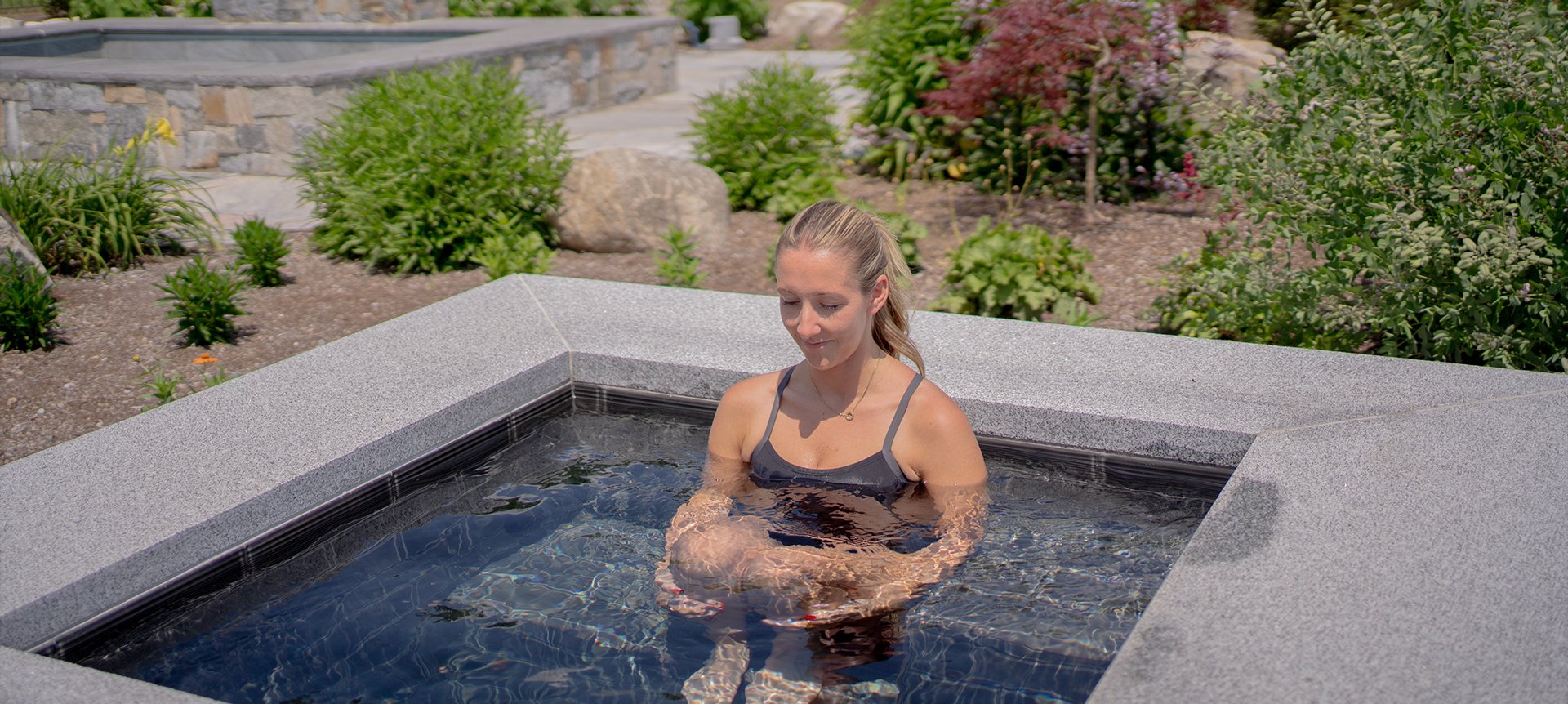
At home, that means swimming with the Slipstream® current, taking a cold plunge, and finishing with heat. It's nothing overly complicated, but it's become one of the most important parts of staying active without constantly feeling beat up.
Swimming has become one of my favorite workouts because it gives me the cardio I crave without asking my joints to absorb another run. I can still get my heart rate up, challenge myself, and work hard, but I get out of the water feeling refreshed instead of sore.
People hear "active recovery" and picture floating around a pool. That's definitely not what's happening over here. My heart is pumping, I'm working, and I leave feeling like I got a real workout in. The difference is that my body doesn't feel stiff or worn down afterward.
Somehow swimming has become both the workout and the recovery.
A Typical Swim Workout
Here’s what my workout looks like:
Run (3 miles)
Goal: Warm up the body without fatiguing the legs.
Mile 1: Easy conversational pace (I can’t talk when I run so for me this is just a casual 9:30/10 min mile)
Mile 2: Moderate pace (pushing the pace to something closer to a 8:30)
Mile 3: Progressively faster, finishing around 10K race effort (leaving a little in the tank for the last .5 miles)
Spend 5-10 minutes hydrating with some light stretching before changing and getting in the pool.
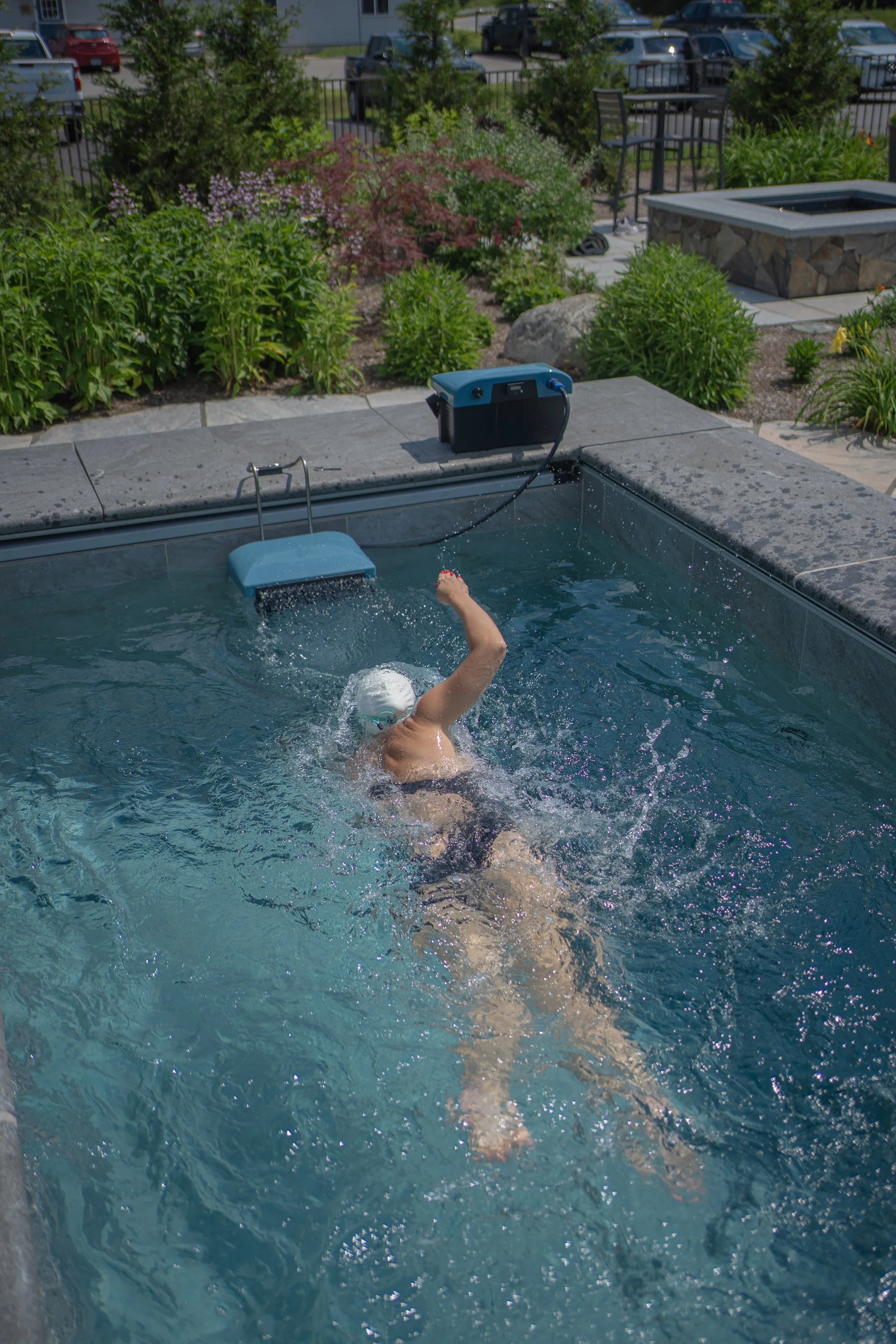
Emma incorporates swimming with the Slipstream® current into her recovery routine, giving her a low-impact way to build endurance, get her heart rate up, and stay active without adding extra stress to her joints.
Swim Workout (1,200 yards)
Warm-up (200 yards)
100 freestyle (slow pace, focusing on form)
100 breaststroke
Main Set (Repeat 4 times = 600 yards)
100 freestyle at moderate effort
50 breaststroke, controlled recovery pace
Rest: 20 seconds after each 150
Cool-down (400 yards)
200 freestyle, easy
100 breaststroke
100 easy choice stroke, whatever feels comfortable
Total Workout
Run: 3 miles
Swim: 1,200 yards
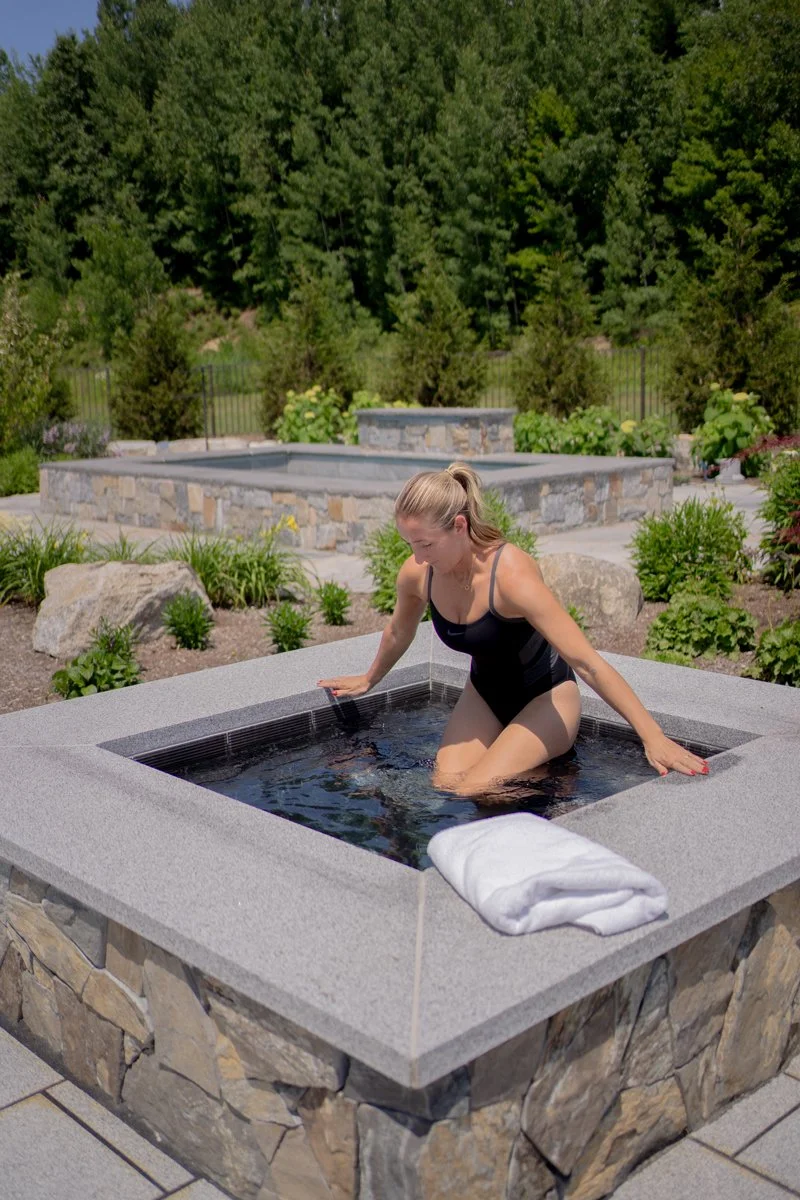
The Impact of Cold Plunge Therapy
The cold plunge is still the hardest part of my routine. I never walk up to it thinking, "This is going to be fun."
The first few seconds are always a mental battle. Your breathing changes, your muscles tense, and every instinct tells you to get right back out. But if I can get through those first moments, something shifts.
One thing I've learned is not to compare myself to what I see on social media. It's easy to scroll past videos of people sitting in 37-degree water for five or even ten minutes and think that's what you're supposed to do. But that's a pretty advanced level of cold exposure, and honestly, it's not my goal.
I've found that consistency matters far more than extremes.
For me, around 58°F feels like the sweet spot, and I usually stay in for two to three minutes. That's enough to leave me feeling refreshed, clear-headed, and ready to take on the rest of my day without pushing my body further than it needs.
I didn't start there, either. Like a lot of people, I eased into it with cold showers and quick plunges. Over time, my body adapted, the initial shock became more manageable, and I started noticing the benefits, less muscle soreness, better focus, and an overall sense of reset.
Everyone responds differently to cold exposure, so if you're thinking about trying cold plunge therapy, it's always a good idea to talk with your doctor first and ease into it at your own pace.
Heat, Contrast, and Recovery
One of my favorite combinations is following a cold plunge with warm water or time in the sauna.
Alternating between hot and cold (often called contrast therapy) has become one of the biggest game changers in my recovery routine. The change in temperature helps get circulation going, eases muscle tension, and honestly just makes me feel good.
Why I'm Thinking About Longevity Now
I'm in my late 20s, which probably sounds early to be talking about longevity.
But I've watched coaches, family friends, and people I've looked up to spend years dealing with chronic pain, surgeries, or injuries that never fully healed because they always pushed through instead of recovering. That really stuck with me. Growing up, the message was always "no days off." More miles. More reps. More effort.
Now I think the people who stay active into their 50s, 60s, and beyond aren't necessarily the people who trained the hardest, they're the ones who learned how to recover.
I'm not trying to squeeze everything out of my body before I'm 30. I want to be running, swimming, hiking, and staying active decades from now. Recovery isn't slowing me down, it's what keeps me moving.
More than Physical Recovery
One of the biggest surprises for me has been how much this routine helps me mentally.
I train most days, but fitness isn't my whole life. I'm focused on growing my career, traveling with friends and family, spending time with the people I love, and chasing goals that have nothing to do with working out.
I've realized recovery isn't just about bouncing back from a hard workout, it's about recovering from everyday life, too.
Whether it's a few minutes in the cold plunge or unwinding in warm water after a long day, it gives me a chance to slow down. My breathing settles, my mind clears, and I can actually leave the stress of the day behind for a little while. Not to mention a break from technology!
When I step back out, I feel like I've reset, not just physically, but mentally too. And honestly, that's become just as valuable to me as the workout itself.
The Takeaway
Swimming, hydrotherapy, cold plunge therapy, and contrast therapy help me keep showing up for the activities I love without feeling like I'm constantly fighting my own body.
Recovery can be different for everyone, this is just what worked for me and I think that’ll shift depending on my stage of life and the training I’m focusing on.
Ready to create a backyard built for wellness and recovery?
Explore our 3D Pool Builder, schedule a visit to our Experience Center to experience a Soake Pool in person, or contact us to start designing a space for movement, recovery, relaxation, and year-round wellbeing.